White Papers & Articles
Related white papers and articles for AI Consulting & Training will appear here as they're published.
View MoreAI Consulting & Training
AI strategy, leadership workshops and staff training built around the work your people actually do - so what they learn on the day is still how they work the week after.
The Monday after
Most organizations have already had the seminar. People left interested, a few tried something that week, and a month later the work looks the way it did before. Nothing went wrong on the day: a talk explains what AI can do, and nothing in it is about the report someone has to finish on Thursday. Adoption happens inside the work, so that is where the training has to be.
Sessions that use the documents, tasks and tools your people already have, so the first thing they do with AI is part of their job rather than an exercise - and somewhere to take the questions that only come up afterwards.
An impressive demonstration, a certificate of attendance, and nobody to ask when the real question comes up the following week. It creates interest, and rarely changes how anyone works.
Capability
Six areas. Most engagements start with an assessment and one team, and grow from what that team finds.
Where your organization actually is: which teams already use AI and how, what data and tools they have, what they are allowed to do with them, and what is holding them back. A picture of the starting point, not a score.
Where AI should change how work is done, and where it should not, set against the constraints you cannot move. A plan that says what happens first and who owns it, short enough to be read.
For the people who have to decide: what AI is good and bad at today, what it costs, where the risks are, and which decisions are theirs. Hands-on, because a leader who has used it asks better questions than one who has been briefed.
Practical training for everyone else, organized by role rather than by tool and built on each team’s own tasks: what to use AI for, what not to, how to check what it gives back, and what must never go into it.
The best use cases come from the people doing the work, not from a list drawn up centrally. We collect them in training and follow-up, sort them by value and by risk, and turn the first few into a roadmap.
Somewhere to go when the real question comes up: follow-up sessions, office hours, and help turning a first success into how the team works. Adoption is what happens after the training, so most of the work is there.
How we work
Conversations with leadership and with the teams, and a look at the tools, the data and the rules around them. Mostly listening: the people doing the work already know where the time goes.
A leadership workshop that ends in decisions - which teams go first, what they may use AI for, what would count as success, and who owns it. Agreed before anyone is trained.
Sessions by role, built on each team’s own documents and tasks, with practice rather than demonstration. People leave having done part of their job with AI, not having watched someone else do theirs.
Three stages in, people know how. The last two are what make them keep doing it.
Follow-up sessions and office hours while the first real uses take hold, and the questions they raise turned into the next use cases. This is where most training stops, and where most of the value is.
People inside the teams who can help the others, guidelines everyone can follow, and a roadmap your organization owns. The measure is whether it keeps finding new uses after we have gone.
Straight answer
Training is usually reported in whatever is easiest to collect: how many people came, and how much they enjoyed it. Neither tells you whether anyone works differently. So before the first session we agree with you what would count - which tasks, done a new way, by which teams - and we look again after the training, not only on the day. We would rather show you that than a satisfaction score.
Before you ask
Two of the case studies on this site are this work. With Ama Town, a municipality, the training runs on a recurring schedule beside office hours for residents and town-hall staff, so there is always somewhere to take a real question. With the Kamonohashi Project, a nonprofit, staff trained on their own work and then moved the repetitive parts of it towards automation.
For leadership, a single well-run workshop can be enough to make the decisions that matter. For everyone else, rarely. A session creates interest; what changes how people work is practice on their own tasks and somewhere to take the questions afterwards. So we plan training with follow-up built in - and we will say so if a single session is all you need.
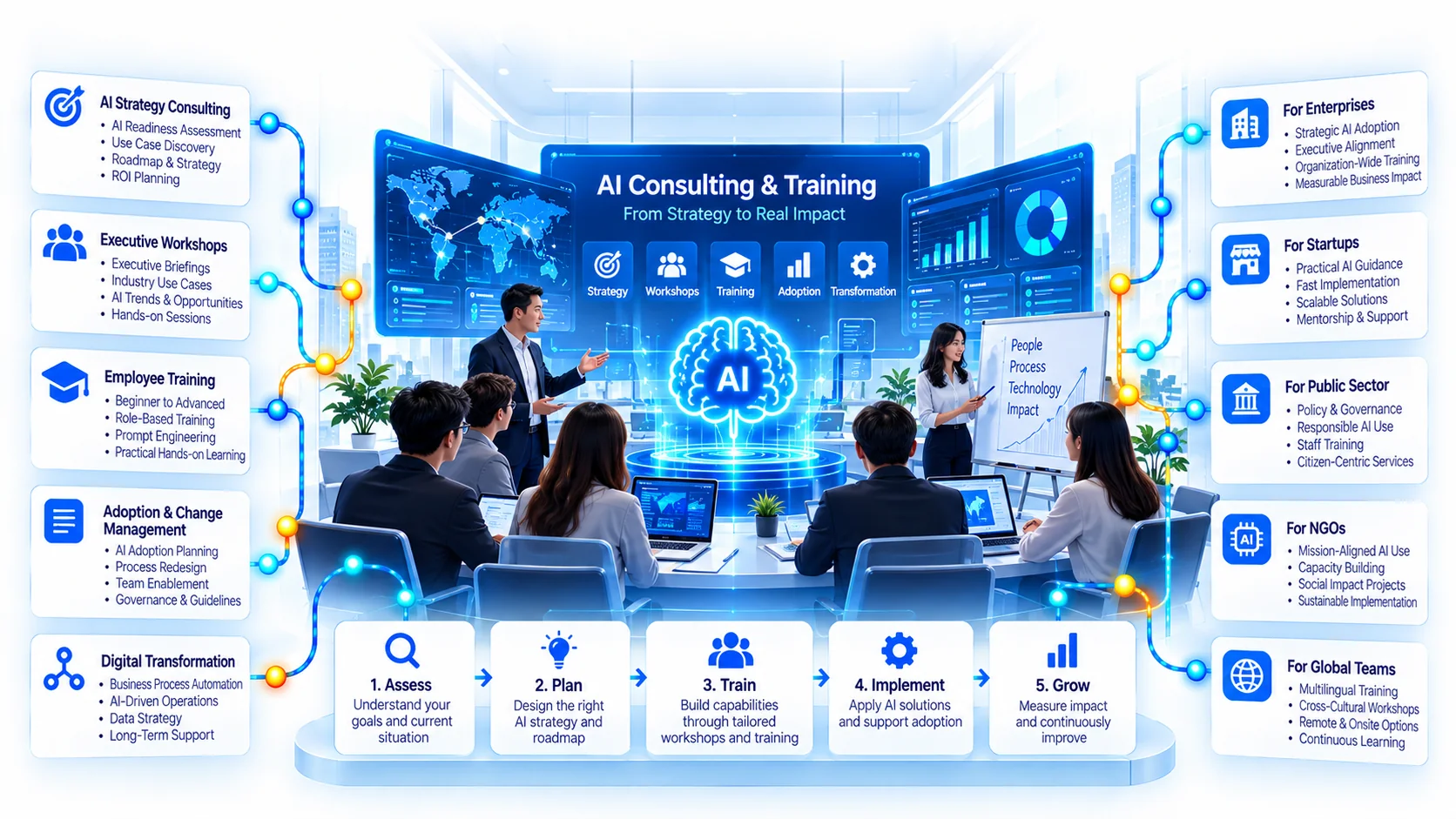
No, and be wary of anyone who does before they have seen your work. What we can do is agree with you, before the first session, which tasks should change and how you would know - and then look. The impact and ROI labels in the illustration at the top of the page are things we plan for with you, not results we promise.
Everyone who will use AI, organized by role: the people who decide, the teams doing the work, and the people who will support them afterwards. A town hall, a fundraising team and an engineering group need different things, which is why it starts with an assessment rather than a syllabus. The audiences drawn in the illustration are examples, not a list of clients, and not everything drawn there is part of every engagement.
Enterprise AI Solutions builds the platform: deployment, governance, MLOps and getting AI into production. This page is the people who will use it - readiness, leadership decisions, training and adoption. Most organizations need both, and they are separate pages because a team may only need one. Enterprise AI Solutions.
Next
Pick one team and describe a normal week: what they write, what they look up, what they wait on. We will come back with where AI would fit into it, what the training would need to cover, and what would count as it working.
Related white papers and articles for AI Consulting & Training will appear here as they're published.
View MoreGet in touch and we'll help you find the right approach.
Talk to Us