White Papers & Articles
Related white papers and articles for Cybersecurity will appear here as they're published.
View More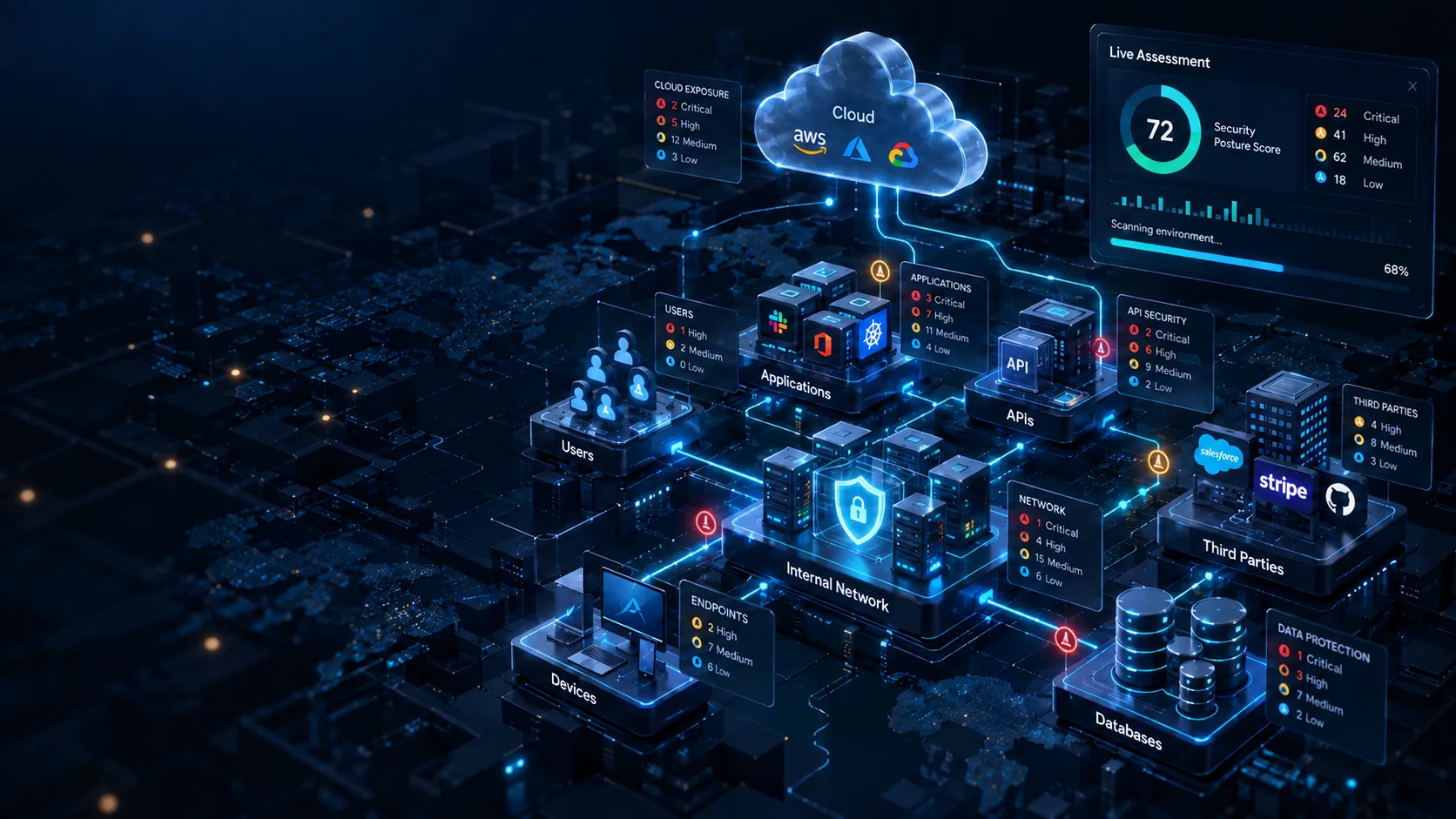
Cybersecurity
Security audits, penetration testing, architecture review, compliance readiness and incident response — delivered as a report your engineers can act on and your board can actually read.
What you receive
Every engagement ends in the same object: a written assessment with the scope you agreed, the method we used, each finding with the evidence behind it, what to do about it, and a retest to confirm it is closed.
Security assessment — sample structure
Findings & Remediation Report
Severities describe how we rank findings — they are our method, not a statement about your systems, which we have not seen.
Two different questions
These are separate jobs and we keep them on separate pages, because buying the wrong one is a common and expensive mistake.
Audits, penetration testing, architecture review, compliance readiness, incident response and training. The question is where are we exposed right now, and the answer arrives as a report with evidence.
Zero-trust AI architecture, role-based permissions, human approval workflows, audit logging and responsible AI policy. The question is how do we make this safe by design, before there is anything to find.
AI Security & GovernanceScope
The nine areas an engagement can cover, and what each one actually means when somebody is looking hard at it.
What of yours is reachable from the internet, including the things nobody meant to publish — forgotten subdomains, staging environments, exposed admin panels, storage buckets left open after a migration.
Authentication, session handling, access control between accounts, injection, business logic that can be driven somewhere it was not designed to go. Most real breaches are a chain of ordinary flaws rather than one exotic one.
The endpoints behind your apps and partners, where authorisation is often assumed rather than enforced, and where an ID incremented by one quietly returns somebody else’s data.
Identity and permission sprawl, network boundaries, key and secret handling, logging that would let you reconstruct an incident afterwards — or would not.
Whether the design holds up as a whole: trust boundaries, segmentation, blast radius when one component is compromised. Reviewed on the whiteboard, not only in the code.
The third parties with access to your systems or your data, and what their compromise would mean for you. Increasingly the route in.
Where you stand against ISO 27001, GDPR, SOC 2 and the rest — framed as gaps and work, rather than as a certificate you can buy.
Preparation before the fact and support during it: containment, understanding what happened, getting operating again, and the rebuild that keeps it from recurring.
Because the well-written email to your finance team still outperforms most technical exploits, and always will.
Scope is agreed with you before anything starts, and we would rather test four of these properly than all nine superficially. That is usually the difference between a report you act on and one you file.
Method
So the report can be acted on in order rather than read in full before anything happens. This describes our grading, not your environment.
Exploitable now, with serious consequence. Fix before anything else on the list; we will tell you the same day rather than waiting for the report.
Realistically exploitable, or a direct route to sensitive data. Scheduled into the current cycle.
Needs particular conditions or access to exploit — often the links in a chain that produces a Critical when combined.
Limited impact alone. Reported honestly as low rather than inflated to make the report look thorough.
Straight answer
Plenty of security proposals open with breach statistics and a number for what an incident would cost you. We have left those off, for the same reason there is no percentage on our test automation page: a figure drawn from someone else’s industry report is not evidence about you.
The other thing sold hard in this market is scanner output in a branded PDF. Automated tooling is genuinely useful and we run it, because coverage matters. But it finds known patterns; it cannot reason about your business logic, judge whether an exposure is actually reachable, or chain three medium findings into the one that matters. That part is people, and it is the part worth paying for.
What we will tell you is what we found in your systems, how we found it, and what to do about it — including, sometimes, that you are in better shape than you thought.
Engagement
What is in, what is out, what must not be touched, and who to call if we find something serious at 2am.
Automated tooling for coverage, then people for everything tooling cannot reason about. Critical findings are reported the moment they are confirmed.
Findings ranked by severity, each with evidence, reproduction steps and a specific fix — plus a summary a board can read.
The report is the halfway point. These two decide whether any of it mattered.
We work with your engineers on the fixes rather than handing over a list and leaving. Advice at this stage is worth more than the report.
We verify the fixes actually closed the finding. An untested fix is a belief, not a remediation.
Deliverable
A security report that only a security engineer can read has failed half its job, because the person who approves the remediation budget is usually not one.
What matters, in plain language, for people who will not read the technical detail and should not have to.
Exactly what was tested and how — so the report can be compared against the next one honestly.
Each with evidence, reproduction steps, impact and a specific remediation. Not a scanner dump with a logo on it.
Ordered by risk and effort, so the first week of work is the week that reduces risk most.
Issued after the fixes, confirming what is closed and what is not.
Behind the service
Our QA and security platform covers automated end-to-end and API testing, security testing, vulnerability scanning, vendor assessments, AI safety analysis and compliance analysis. It is coming soon — and this practice is where it comes from. The engineers building it are the ones who would run your assessment.
Before you ask
Most attacks are not aimed at anyone in particular. They are automated sweeps looking for a known weakness across every address that answers, and they do not check your headcount first. Being small changes who would deliberately target you; it does not change whether an exposed admin panel gets found.
Those are controls, and good ones. This is the separate question of whether they are configured, positioned and maintained the way you believe — and what someone reaches if they get past them. Nearly every organisation we assess has at least one control that is present, assumed to be working, and not.
Scope and rules of engagement are agreed before anything starts, including what must not be touched and what is tested only in staging. Anything with real disruption potential is run by you first. That conversation is the first step of the engagement rather than an afterthought.
A scanner finds known patterns and produces volume. It cannot reason about your business logic, chain three medium findings into one that matters, or tell whether an exposure is actually reachable. We run the tooling because coverage matters — and then people do the part that decides whether the report is worth reading.
Partly, and there is a second page for the rest. Anything AI brings into your attack surface — exposed endpoints, credentials held by agents, data leaving through a vendor — is in scope for an assessment. Designing the controls in the first place, zero-trust AI architecture, permissions, approval flows and audit logging, sits under AI Security & Governance.
Next
Tell us what you run and what worries you. We will come back with what is worth testing first and what can wait — which is a shorter list than most proposals suggest.
Related white papers and articles for Cybersecurity will appear here as they're published.
View MoreGet in touch and we'll help you find the right approach.
Talk to Us